Underwater
El Pit
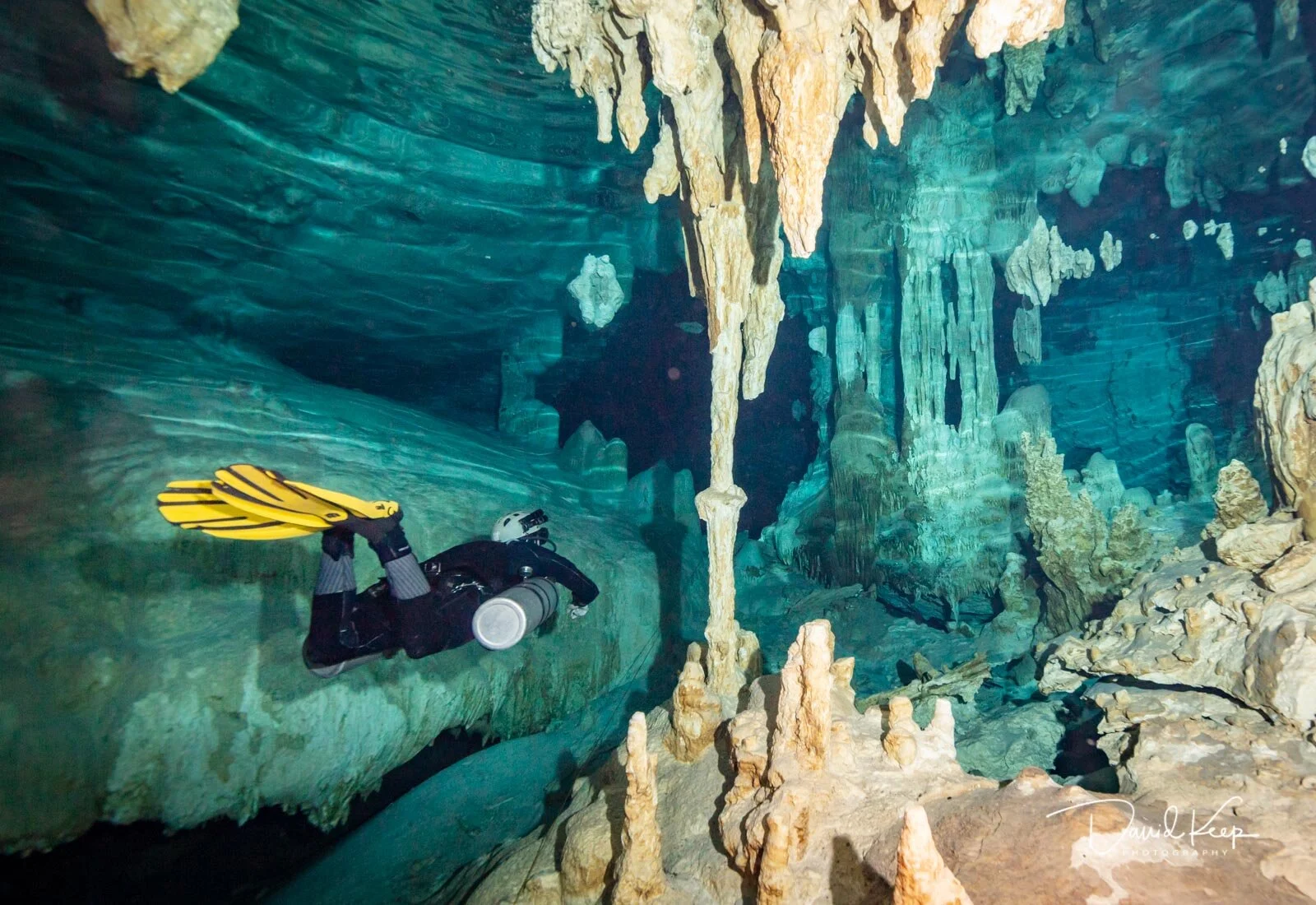
This image is probably the lowest quality image I’ve ever posted on my website but I absolutely love it. It comes from my cenote diving trip last August.
This dive is known as “El Pit” & whilst the name might be uninspiring the dive is anything but that. With a stunning 100-foot pillar of light illuminating the halocline and gas cloud layers, the effects of the illumination in this underwater cave really have to be seen to be believed. There’s a reason why it’s known as the “Dream Dive” around the cave diving community - on sunny days, the light show in the vast cenote is absolutely mesmerizing. And there, right at the bottom, is a well preserved fallen tree to give scale & context to the image.
One of the most eerie places I’ve ever dived for sure.
Diving in the Mexican Cenotes
I’m finally getting around to processing some images from my trip to the Mexican cenotes last August. A cenote, (pronounced say-noh-tay), is a natural pit, or sinkhole, resulting from the collapse of the limestone bedrock which then exposes the groundwater underneath. They are especially associated with the Yucatán Peninsula of Mexico.
You may have heard gruesome stories surrounding the fact that they were used by the ancient Maya for sacrificial offerings - this is true and many human remains have been found in them. But the ancient Maya believed the cenotes to be much more than simply a place to deliver their sacrificial dead. They considered them to be the portal to Xibalba, their Netherworld. Given all the knowledge that we now know the ancient Maya possessed, they no doubt also knew, or at least suspected, that the thousands of cenotes are interconnected, forming an underground labyrinth of tunnels. It was these tunnels I was diving in last August.
It’s a surreal form of diving - you enter in an open cenote, often crowded with tourists, but led by your expert guide (& boy does he need to be expert) you follow the tunnels. Think of majestic caves with stalactites & stalagmites & I was effectively flying through them! And then, as if by magic, we’d pop up in another open cenote, often in the middle of the jungle & inaccessible by foot. The water is pure & crystal clear because it’s been filtered through the bedrock - providing you don’t disturb the bottom this is some of the best visibility a diver will ever experience.
Initially I found it disconcerting to know I couldn’t surface if I had a problem, but I soon settled and proceeded to enjoy an amazing three days. Here’s a couple of images - more to follow plus a video over the next week or so.

Sea Lion Video
Here’s the sea lion video :-)
I shoot these videos with a GoPro attached to the top of my camera rig, so the footage I get is very much secondary to the stills I’m taking. I hardly ever frame up for the video shots, I get good footage only if the camera happens to be pointing in the right direction while I’m taking the still. Consequently I’m often struggling to find enough footage when I put the videos together - but not this time.
Sea lions are so playful, inquisitive & cheeky that it was impossible not to get lots of great footage. I could have made the video 20 minutes long easily. At times their behaviour was so extrovert towards the diver that it’s impossible not to come to the conclusion they were just plain showing off!
An example was when one juvenile picked up a shell in front of me. She would take it up to the surface, drop it, let it gently sink down & swoop in, catch it in her mouth & repeat the process. She did this about 10 times, often leaving it to the last second before the shell hit the sea floor before zooming in & taking it. She was showing me just how agile & coordinated she was - it seemed to me that it was all done to impress me.
Now I know an animal behaviourist would explain the real reason & I’m sure it had nothing to do with me at all - but I don’t want to know. I think I made a connection with these incredible animals many times in the week & that’s how I want to leave it. To me it was one of the most special trips of my diving career to date. Happy days.
Photographing the Sea Lions of La Paz
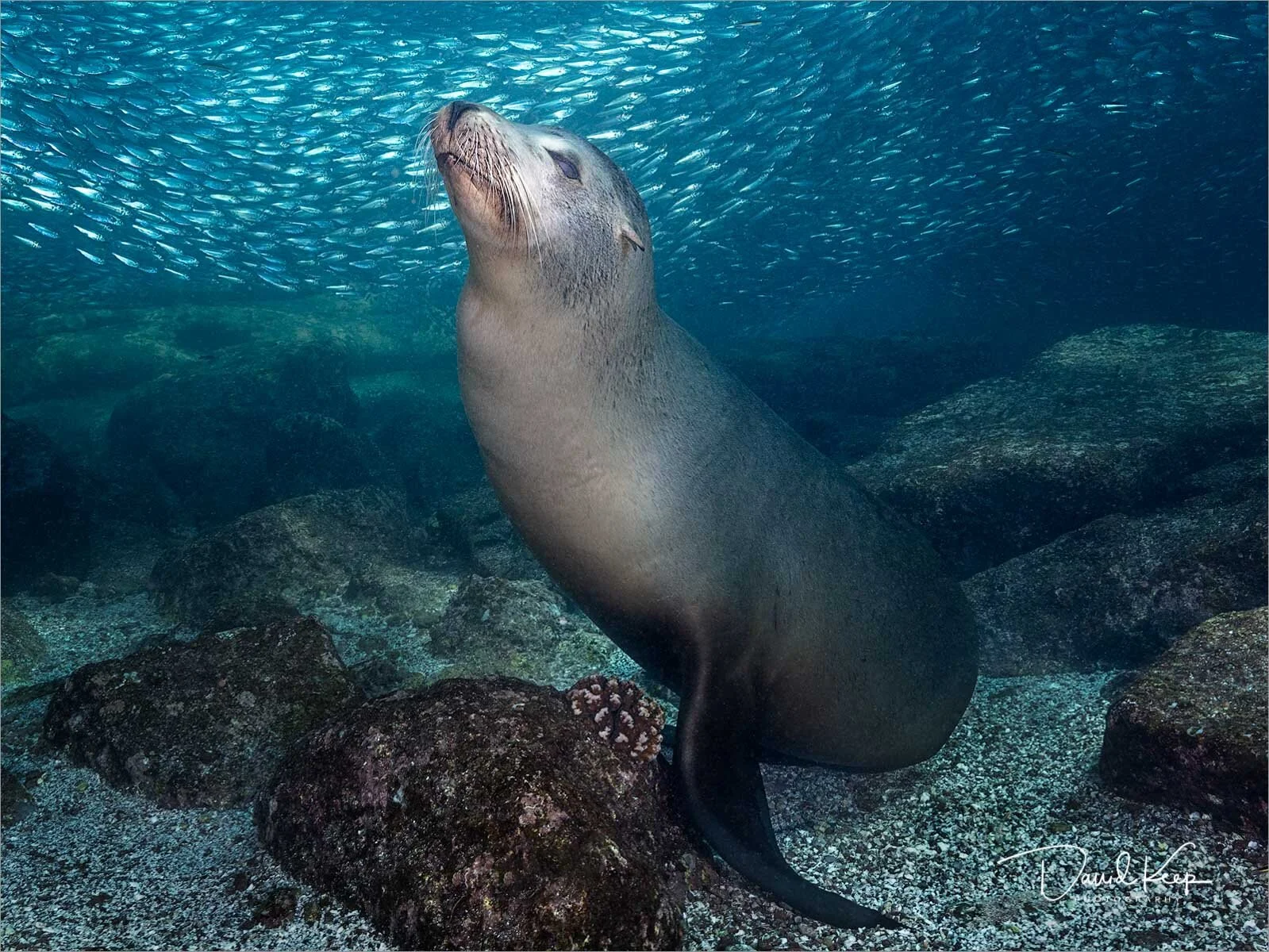
Last November I visited Mexico, principally to photograph the sea lion colony which lives on the small outcrop of rock known as Los Islotes, an hour’s boat ride from Baja California Sur's capital of La Paz. Sea lions are friendly, inquisitive animals that often interact with divers. They also make great photographic subjects, offering opportunities ranging from super cute pups, mock fighting of juveniles and territorial behaviour of the bulls.
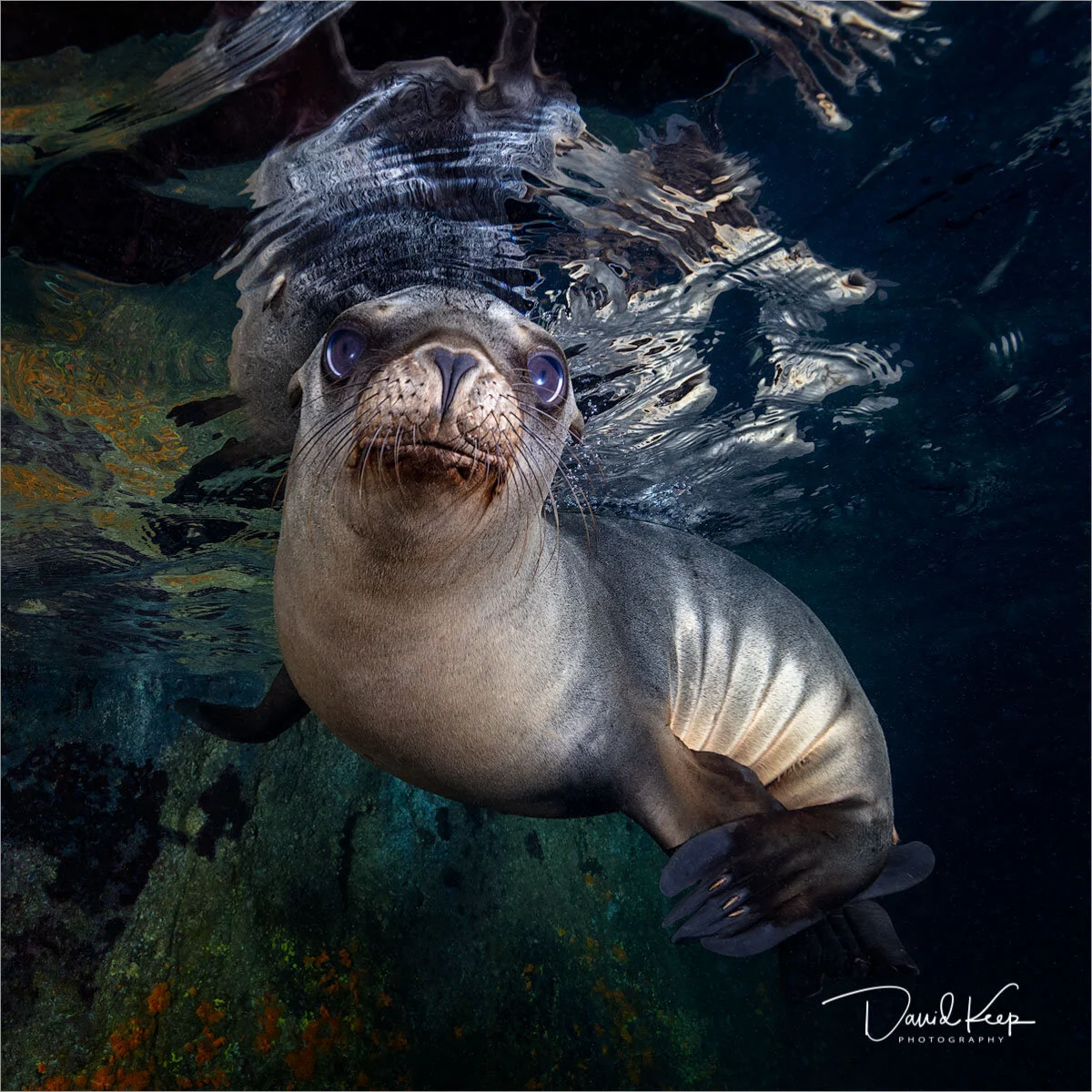
This image falls into the super cute group & was taken in a small cave the pups use as a playground, presumably keeping out of the way of the more boisterous juveniles. It was quite a small cave, probably only 3m x 2m inside - I found I could surface & just get my head above water before hitting the roof. There must have been around 20 pups playing inside & they were very inquisitive of their new visitor. They pulled my fins, mask, air hose - anything they could get hold of. It was quite claustrophobic with only enough room for one person inside, plus it was obviously dark. Some divers found it a bit too much, particularly when the sea lions started play-biting (think a small puppy’s bite), but I was ok & visited at least 5 or 6 times over the week. I’ve got several favourite images & this is one of them - in addition to the cute look on his face I also love the colour tones.
I’ll post more images over the next few days, plus I’m going to start pulling the video together. I’ve got a lot of footage which will mean it’ll not be a quick job, but I’m genuinely looking forward to looking through it.
Homage to Nature
One (small) advantage of lockdown is that it’s giving me time to do more processing and I’m currently working through the images I took on a trip to Mexico last November. The primary target was to photograph the sea lion colony which lives on the small outcrop of rock known as Los Islotes, an hours boat ride from Baja California Sur's capital of La Paz. Sea lions are very friendly, interactive animals - it was a great experience & I’ll write more about it over the next few weeks.
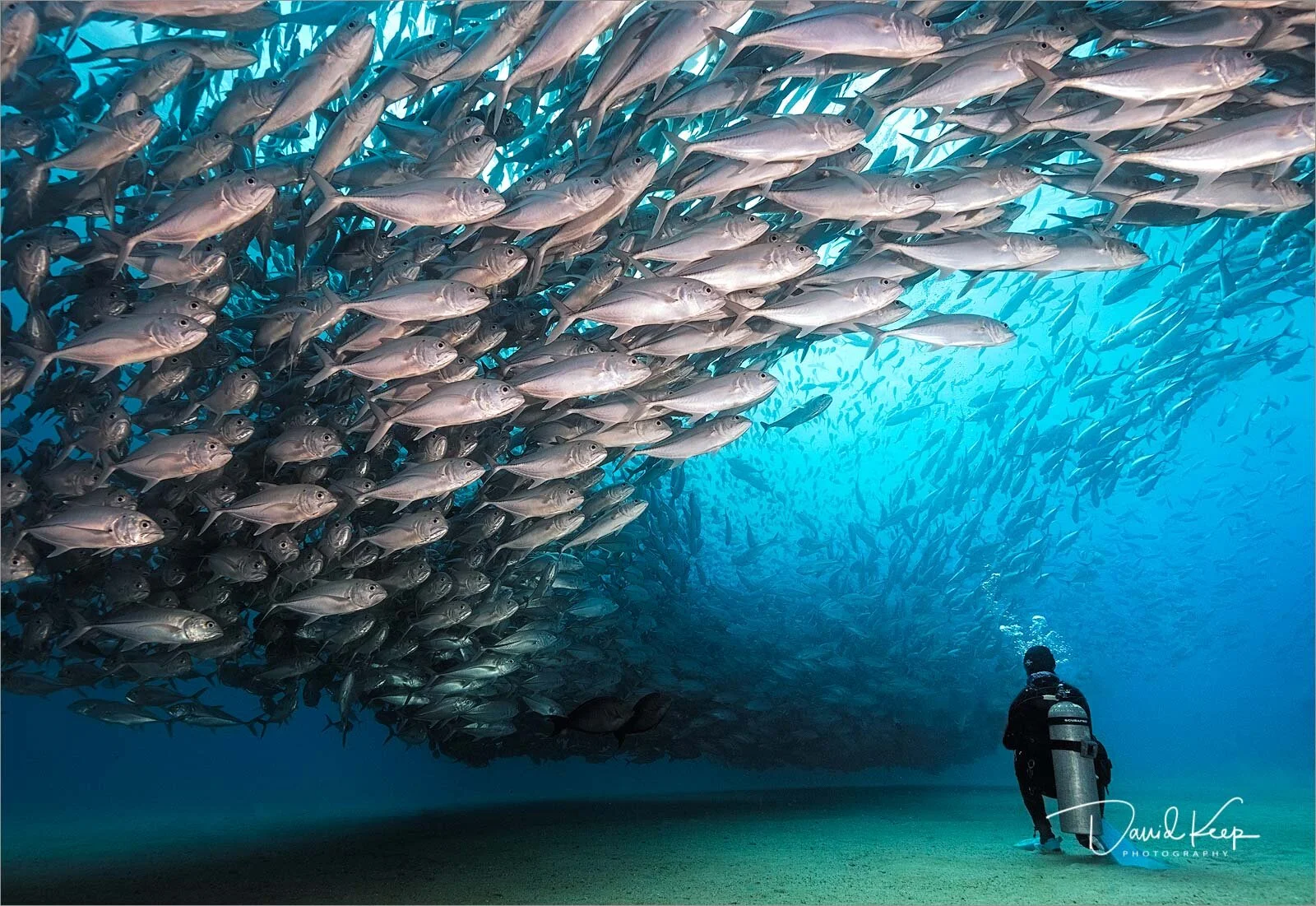
We also made a three day excursion to the Cabo Pulmo Marine Reserve which was reached by a 4 hour drive over mostly uncomfortable roads - but it was worth it. Our sole aim for the trip was to experience the huge shoals of Horse-eye jacks (Big-eye Trevally) that live there. They’re a relatively large fish, average around 50cm & 8kg, and the shoals are simply enourmous - many 1,000s of fish. Just like a flock of starlings they move in coordination, forming streaming sinuous shapes - it’s very beautiful to watch. It was one of the most amazing natural spectacles I’ve witnessed underwater & this image is my favourite from the 100s I took. The diver is another member of our party and her pose was not set up - it really was one of those situations were you just had to stop & marvel at the wonders of nature.
Take a look at the short video below & you’ll get some idea of how big the shoals are.